Why Better Lead Data Beats More Leads at Trade Shows
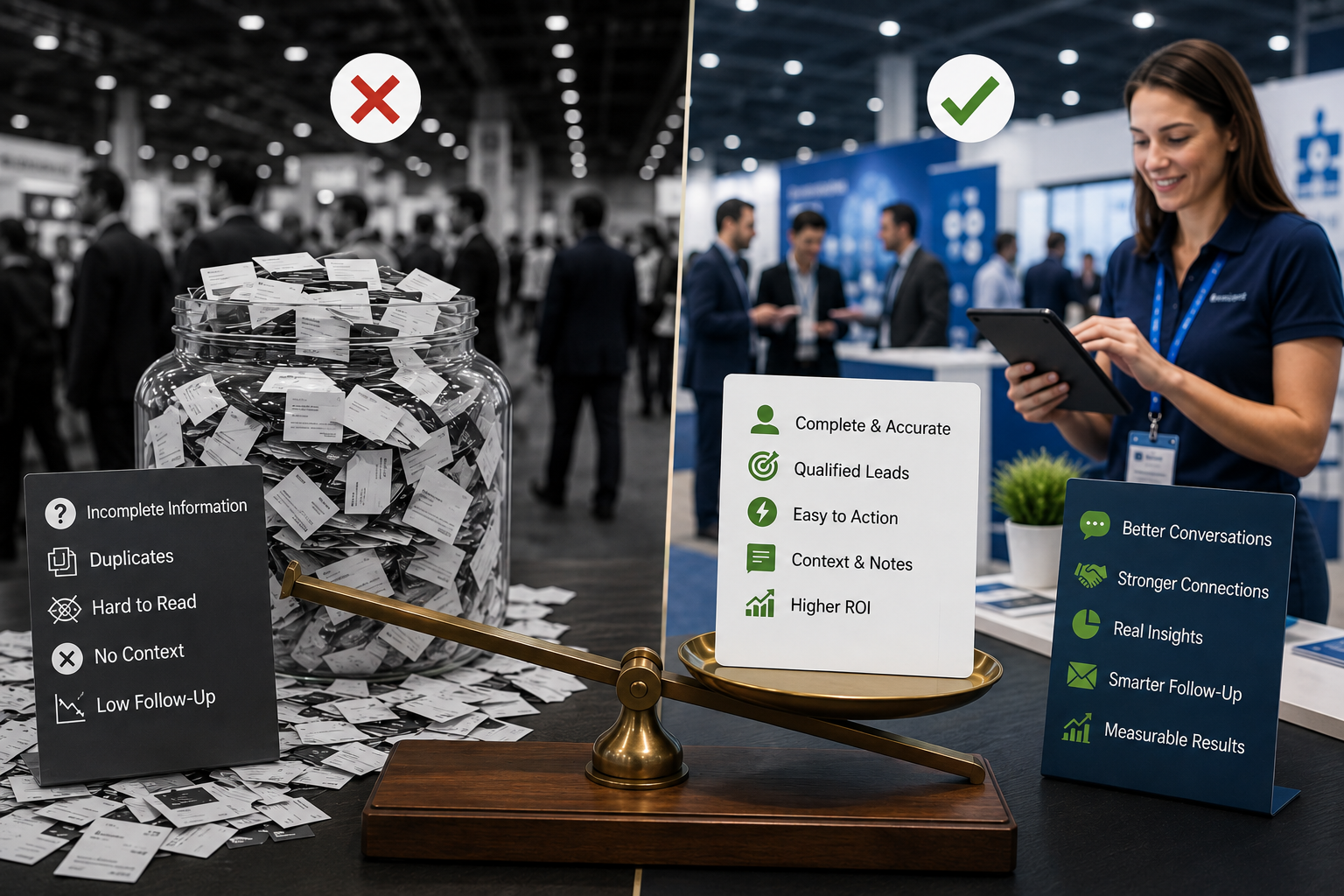
A crowded booth can feel successful. Hundreds of scans look impressive on a dashboard, but the problem appears when sales opens the file. Some records are incomplete, several are duplicates, and most reveal nothing about the attendee’s interest, the discussion, or the next step.
That is why lead quality matters more than raw volume. Well-qualified records with accurate details, clear needs, notes, permission status, and agreed actions can support better follow-up than unexplained scans. The best lead capture tool for trade shows turns meaningful booth interactions into reliable, actionable data without disrupting the attendee experience.
Volume still shows reach and booth traffic, but it becomes useful only when records are accurate enough to route, prioritize, personalize, and measure.
What Makes Trade Show Lead Data High Quality?
High-quality lead data gives the next person enough information to take the right action. A representative who missed the event should still understand who the attendee is, why the conversation mattered, and how to continue it.
A useful record usually combines four types of information:
|
Data layer |
What it explains |
Examples |
| Identity | Who the person is | Name, company, role, verified contact details |
| Fit | Whether the person matches the intended audience | Industry, company profile, role, account relationship |
| Intent and context | What the person needs and how serious the interest appears | Challenge, topic discussed, timeframe, questions, objections |
| Action | What should happen after the conversation | Send a guide, schedule a demo, introduce a specialist, nurture later |
No single field proves that someone is a strong prospect. A senior title may indicate influence but not active need, while a long visit can mean interest, research, or a customer issue. Quality comes from combining reliable identity, relevant context, and human judgment.
Why a Large Lead List Can Create False Confidence
Scan totals are easy to compare but can hide process weaknesses. Scanning every passerby raises the count while lowering average usefulness. Sales then spends time cleaning and researching records for people who may not have requested follow-up.
High-intent prospects can become buried in an undifferentiated list. Generic outreach may reach attendees who only entered a giveaway. Duplicate contacts can go to different representatives, while missing notes force the team to guess. Poor data can also weaken trust: an unrelated pitch suggests that the booth team was not listening.
Activity Metrics and Outcome Metrics Are Different
Booth visits, scans, downloads, and reward claims describe activity. Qualified conversations, meetings, completed follow-ups, opportunities, and influenced pipeline describe outcomes. Both matter, but they answer different questions.
A high-traffic activation may build awareness without creating immediate opportunities, while a small roundtable may produce several important conversations. Reporting should preserve that distinction.
How Better Data Improves Every Post-Event Step
Quality data shortens the distance between a conversation and a useful response. When the record includes the attendee’s role, interests, pain points, timing, and requested action, the team can make better decisions without reconstructing the discussion from memory.
Prioritization Becomes Explainable
Lead scoring can help teams work through an event list, but its basis should be understandable. Consider two dimensions separately:
- Fit: Does the person or organization match the audience the exhibitor can serve?
- Intent: Did the conversation reveal an active need, meaningful interest, or clear next step?
Keeping these dimensions visible prevents a target account with no current project from looking identical to an engaged buyer with a defined timeline. A motivated attendee outside the target market may need a partner, referral, or educational path instead.
Routing Becomes More Accurate
Ownership may depend on territory, product interest, account status, or conversation type. Structured data routes technical questions to specialists, customers to account teams, and partnership requests to business development.
Follow-Up Becomes Relevant
Useful outreach continues the discussion. A note such as “requested an integration overview for a multi-event rollout” gives the representative a clear starting point. AI may summarize an approved conversation or draft a response, but a person should verify names, claims, commitments, and recipients before sending.
How the Best Lead Capture Tool for Trade Shows Protects Data Quality
When comparing platforms, test the complete journey from booth interaction to CRM record. A polished scanning screen is helpful, but it does not show whether the resulting data will be usable.
Flexible Capture With Reliable Identity
The system should support the event’s actual badges, QR codes, digital business cards, registration records, or wallet credentials and associate each interaction with the right attendee. It also needs editable records, field validation, and duplicate handling.
Fast Qualification Without an Interrogation
Booth staff need a short set of questions that fits naturally into a conversation. The fields should reflect the exhibitor’s real goals, not a generic template. Useful topics may include the attendee’s priority, current approach, decision role, timeframe, and preferred next action.
Too many required fields can slow the exchange and encourage staff to select arbitrary answers. A balanced workflow captures essential structured information quickly and leaves room for concise notes.
Conversation Context and Human Review
Notes, tags, transcripts, and summaries can add context when used appropriately. If recording is supported, consent should be clear and the output reviewable. AI may misinterpret names, acronyms, figures, or commitments, so the attendee’s explicit request should take priority over inference.
CRM-Ready Data, Not Just an Export
Confirm whether identity, qualification, source, notes, scores, permissions, ownership, and next actions map into the intended CRM fields. Test existing contacts, duplicate rules, failed transfers, and ownership before the show.
Analytics That Connect Activity to Results
Useful reporting should let teams compare total contacts with unique visitors, qualified conversations, meetings requested, follow-up completion, opportunities, and other defined outcomes.
Attribution should remain honest. A trade show may influence a deal alongside earlier marketing, existing relationships, and later sales work. Event reporting should not claim sole credit without evidence.
A Practical Workflow for Collecting Leads at Trade Shows
Better data starts before anyone enters the expo hall. Use this process to align technology, booth behavior, and follow-up:
- Define the objective. Choose pipeline, partnerships, customer engagement, awareness, or another measurable outcome.
- Agree on qualification. Define fit, intent, urgency, and disqualification in terms every representative understands.
- Choose necessary fields. Collect only what supports identity, qualification, permission, routing, and follow-up.
- Prepare the CRM. Map fields, owners, duplicate rules, and response paths before the event.
- Train the team. Practise scanning, concise questions, notes, consent, and next-action selection.
- Audit onsite. Review missing data, duplicates, note quality, adoption, and routing while corrections can still help.
- Measure results. Compare segments by completed follow-ups, replies, meetings, and opportunities.
This approach improves collecting leads at trade shows because it treats capture as part of a business process, not an isolated scanning task.
Privacy and Data Minimization Support Better Quality
More information does not automatically create better records. Unnecessary fields add friction and governance work. Explain what is collected, why it is needed, who receives it, how long it is retained, and what choices the attendee has.
The NIST Privacy Framework provides a voluntary structure organizations can use to identify and manage privacy risk. Actual legal obligations vary by location, data type, recording method, and planned use. Organizers and exhibitors should involve qualified privacy or legal professionals when the workflow includes conversation recording, sensitive information, or attendees from multiple jurisdictions.
Privacy is also a data-quality issue. Clear permission records help the follow-up team understand which communication is appropriate. Purposeful collection keeps the record focused on information people can genuinely use.
Common Mistakes That Reduce Lead Quality
The most common failure is rewarding staff only for scan totals. If success means volume alone, qualification and notes will feel like obstacles.
Other warning signs include long forms, inconsistent rating definitions, unexplained AI scores, recordings without a clear consent process, delayed data access, weak CRM mapping, and no owner for the next action. Technology cannot repair a process that lacks shared definitions and accountability.
Another mistake is treating every attendee as a buyer. Customers, partners, journalists, and researchers may create legitimate value but need different response paths.
What Costs and Capabilities Should Buyers Compare?
Pricing may depend on events, users, scans, exhibitors, enrichment, transcription, integrations, analytics, or support. Ask for the full cost, limits, and optional services.
Then give every vendor the same demonstration scenario: capture, qualify, document consent, route, synchronize, prepare follow-up, and report the outcome. Include booth, event, sales operations, and privacy stakeholders in the review.
When Professional Assistance May Be Appropriate
A small expo may work well with a simple mobile form. Implementation support becomes more valuable with many exhibitors, wallet credentials, conversation recording, custom scoring, several CRM destinations, complex permissions, international attendees, or detailed reporting.
counterTEN connects verified identity, wallet-based ticketing, consent-based conversation intelligence, lead qualification, sponsor activation, follow-up support, and event analytics within its conference platform. Event teams can compare that connected approach with their current workflow to determine whether they need a capture app or a broader conference system.
Frequently Asked Questions
1. How should a team define a high-quality trade show lead?
A high-quality lead matches pre-event criteria and has enough context for an appropriate next action. That may include reliable identity, organizational fit, a stated need, meaningful engagement, influence, timing, permission, and requested follow-up.
The definition should reflect the exhibitor’s audience and process, and staff should be able to explain each priority.
2. Can a low-volume event still produce strong ROI?
Yes. A focused event may create fewer contacts but more conversations with relevant buyers, partners, or customers.
Evaluate qualified meetings, requested actions, completed follow-ups, opportunities, influenced pipeline, and relationship value alongside contact totals. Use a pre-event objective and baseline so events with different purposes are not compared unfairly.
3. Which fields should a lead capture tool for events include?
A lead capture tool for events should support essential identity fields, company and role, interaction source, relevant qualification answers, concise notes, consent status, lead owner, priority, and a specific next action.
The exact fields depend on the event goal and CRM. Every required field should have a clear operational purpose.
4. How can conference lead capture data be checked during an event?
Review a sample after the first session or day. Check missing fields, duplicates, note clarity, qualification consistency, consent, routing, and CRM synchronization.
Ask staff about friction and confirm that priority leads have owners. Early audits allow adjustments before the event ends.
5. Should AI automatically decide which trade show leads sales contacts?
AI can organize records, summarize approved conversations, identify configured signals, and recommend priorities. It should not be the only decision-maker because models may misread context or favor incomplete signals.
Keep scoring criteria visible, allow corrections, and require human review for high-impact routing or outreach. The attendee’s expressed needs, permissions, and agreed next step should guide the final decision.