A Complete Guide to Choosing the Right Lead Retrieval System for Trade Shows
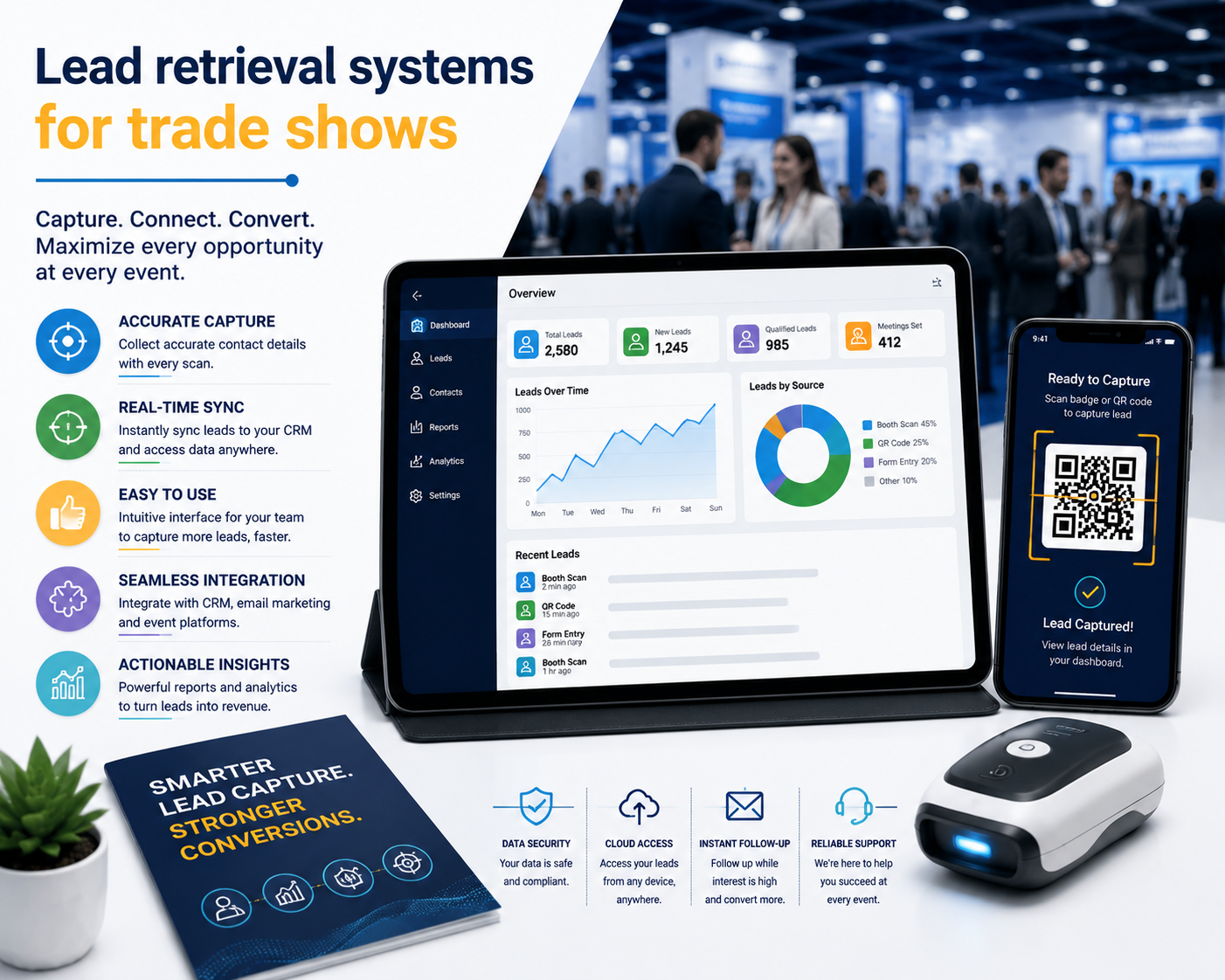
Trade shows continue to be one of the most effective ways for businesses to build relationships, showcase solutions, and connect with potential customers. However, the value of participating in an event depends on much more than the number of visitors who stop at a booth. The ability to capture accurate information, understand attendee interests, and follow up effectively determines whether those conversations turn into meaningful business opportunities.
Many exhibitors still rely on traditional lead collection methods, such as exchanging business cards or manually recording attendee details. While these methods may seem simple, they often create challenges after the event, including incomplete information, delayed follow-ups, and difficulty identifying the most valuable prospects.
This is why businesses are increasingly adopting lead retrieval systems for trade shows. These digital solutions help exhibitors collect attendee information efficiently, organize leads based on interest level, and create a smoother process between event conversations and future sales activities.
Choosing the right lead retrieval solution requires a clear understanding of your event goals, team workflow, data requirements, and the type of experience you want to create for attendees.
What Is a Lead Retrieval System for Trade Shows?
A lead retrieval system is a technology solution that enables exhibitors, sponsors, and event teams to collect and manage attendee information during trade shows, conferences, and exhibitions.
Instead of depending on manual data collection, these systems use tools such as badge scanning, QR codes, mobile applications, and digital attendee profiles to capture relevant information in real time.
A modern lead retrieval platform typically helps businesses collect contact details, record important conversation notes, qualify prospects, and share information with sales teams for future engagement.
The main purpose is not simply collecting a list of contacts. A valuable system helps businesses understand who their prospects are, what they are interested in, and how they should be approached after the event.
Why Lead Retrieval Systems Matter for Trade Show Success
A successful trade show strategy depends on the quality of interactions, not just the quantity of visitors. Without an organized process, businesses may collect hundreds of contacts but struggle to determine which opportunities deserve immediate attention.
Improving Lead Accuracy and Data Collection
Trade show environments are often fast-paced. Sales representatives may speak with dozens of visitors within a few hours, making manual note-taking difficult.
A digital lead retrieval system allows teams to capture information instantly while maintaining the flow of conversation. This reduces errors and ensures that important details are not forgotten after the event.
Accurate data also helps sales and marketing teams create more personalized follow-up communication based on each attendee’s needs and interests.
Creating Better Lead Qualification Processes
Not every visitor at an exhibition has the same level of buying interest. Some attendees may be gathering information, while others may already be searching for a specific solution.
A strong lead retrieval process allows exhibitors to identify lead quality by understanding:
- The attendee’s business needs and interests
- Their level of purchase intent
- Their preferred follow-up approach
- The products or services they are interested in
This information allows sales teams to prioritize their efforts and create more relevant conversations after the event.
Supporting Faster Post-Event Follow-Up
The period immediately after a trade show is critical. Delayed responses can cause potential customers to lose interest or move toward other providers.
With organized lead information, businesses can quickly review conversations, assign follow-up tasks, and create targeted communication strategies.
Key Features to Look for in Lead Retrieval Systems for Trade Shows
The right system should support the entire lead management process, from initial interaction to post-event analysis. Before selecting a platform, businesses should evaluate whether it provides the features required for their specific event objectives.
Mobile Lead Capture Capabilities
Since trade show representatives are constantly interacting with attendees, mobility is essential. A reliable lead retrieval app for events should provide a simple experience that allows teams to capture information directly from mobile devices.
Important capabilities include:
- Fast attendee badge or QR code scanning
- Real-time information access
- Digital notes and lead qualification
- Easy sharing between team members
A mobile-friendly solution helps representatives focus on conversations instead of spending time managing paperwork.
Lead Qualification and Customization
Every business has different sales priorities. A useful system should allow companies to customize how they categorize and evaluate leads.
For example, exhibitors may want to identify whether an attendee is:
- Looking for immediate solutions
- Interested in future opportunities
- Requesting additional information
- Suitable for a specific product or service
Custom qualification options make collected data more valuable for sales teams.
CRM and Marketing Integration
Lead retrieval software becomes more effective when it works alongside existing business systems.
Integration with CRM and marketing platforms helps businesses avoid manual data transfers and creates a smoother workflow between event teams, marketing departments, and sales representatives.
This connection allows businesses to continue nurturing relationships long after the trade show has ended.
Reporting and Analytics
Understanding event performance is essential for improving future participation.
A strong reporting system can help businesses evaluate:
- Lead volume and quality
- Team performance
- Engagement levels
- Follow-up progress
- Overall event outcomes
These insights allow companies to make informed decisions about future event investments.
Lead Retrieval Software vs Traditional Lead Collection Methods
Traditional lead collection methods, such as business cards and spreadsheets, can create difficulties when managing large volumes of contacts.
Although these methods may still support networking, they often require additional manual work after the event. Information must be entered, organized, and reviewed before meaningful follow-up can begin.
Modern lead retrieval software simplifies this process by capturing information digitally and creating a structured workflow for managing prospects.
The biggest difference is that digital solutions provide businesses with context. Instead of only knowing who visited a booth, teams can understand what the attendee discussed, what they were interested in, and what action should happen next.
How to Select the Right Lead Retrieval Solution for Your Event
Choosing a lead retrieval platform should begin with understanding your business objectives rather than simply comparing features.
Define Your Event Goals
Every event has different success measurements. Some businesses focus on generating sales opportunities, while others prioritize networking, sponsor engagement, or brand awareness.
Before choosing a platform, consider:
- What type of leads do you want to generate?
- How will your team measure success?
- What information is most important after the event?
Clear objectives help ensure that the selected solution supports your overall event strategy.
Consider Your Team Workflow
The right system should match how your team operates during an event.
For smaller teams, a simple mobile-based solution may be sufficient. Larger organizations may require advanced features such as multiple user access, detailed analytics, and deeper integrations.
Consider how many people will use the system, how information will be shared, and who will manage follow-up after the event.
Review Security and Data Management
Since lead retrieval platforms handle attendee information, businesses should carefully evaluate data management practices.
Important considerations include secure information handling, access controls, privacy features, and attendee consent management.
A responsible approach to attendee data helps create trust and supports better relationships with potential customers.
The Role of AI and Digital Identity in Modern Lead Capture
Event technology is evolving beyond simple contact collection. Modern solutions are helping businesses create more personalized and connected experiences through digital identity, automation, and intelligent data analysis.
AI-powered tools can help organizations understand attendee behavior, identify engagement patterns, and improve networking opportunities. Digital identity solutions can also reduce friction by allowing attendees to share verified information more easily.
Platforms like counterTEN combine digital identity, event engagement, sponsor activation, and analytics capabilities to help organizations create more measurable and connected event experiences.
Common Mistakes to Avoid When Choosing a Lead Retrieval System
Selecting the wrong platform can reduce the effectiveness of your event strategy. Businesses should avoid choosing a solution based only on price or basic contact collection features.
One common mistake is ignoring what happens after lead capture. Collecting information is only valuable when businesses have a clear process for qualification, follow-up, and measurement.
Another mistake is selecting a platform that is difficult for event staff to use. A complicated system can reduce adoption and create unnecessary challenges during busy event hours.
The ideal solution should balance functionality, simplicity, and long-term value.
Benefits of Modern Tradeshow Lead Retrieval Solutions
A well-designed tradeshow lead retrieval solution helps businesses create a more organized approach to event networking and sales development.
Key benefits include:
- More accurate attendee information collection
- Faster lead qualification and organization
- Better collaboration between event and sales teams
- More personalized follow-up communication
- Improved visibility into event performance
- Stronger measurement of event outcomes
The goal of lead retrieval technology is not simply to collect more contacts. It is to help businesses build stronger relationships and create opportunities that continue beyond the trade show floor.
Frequently Asked Questions
What is a lead retrieval system used for at trade shows?
A lead retrieval system helps exhibitors collect attendee information digitally, organize prospects, qualify leads, and improve follow-up after trade shows.
How does a lead retrieval app for events work?
A lead retrieval app allows event teams to scan attendee information, record notes, categorize prospects, and manage collected data through mobile devices.
Why is lead retrieval software better than manual lead collection?
Lead retrieval software reduces manual work, improves data accuracy, and helps businesses organize and follow up with prospects more effectively.
What features should businesses consider when choosing a lead retrieval system?
Businesses should consider features such as badge scanning, mobile access, lead qualification, CRM integration, analytics, reporting, and secure data management.
How can lead retrieval systems improve trade show ROI?
These systems help businesses understand lead quality, improve follow-up processes, measure engagement, and make better decisions for future events.