What Is Trade Show Lead Capture and How Does It Work?
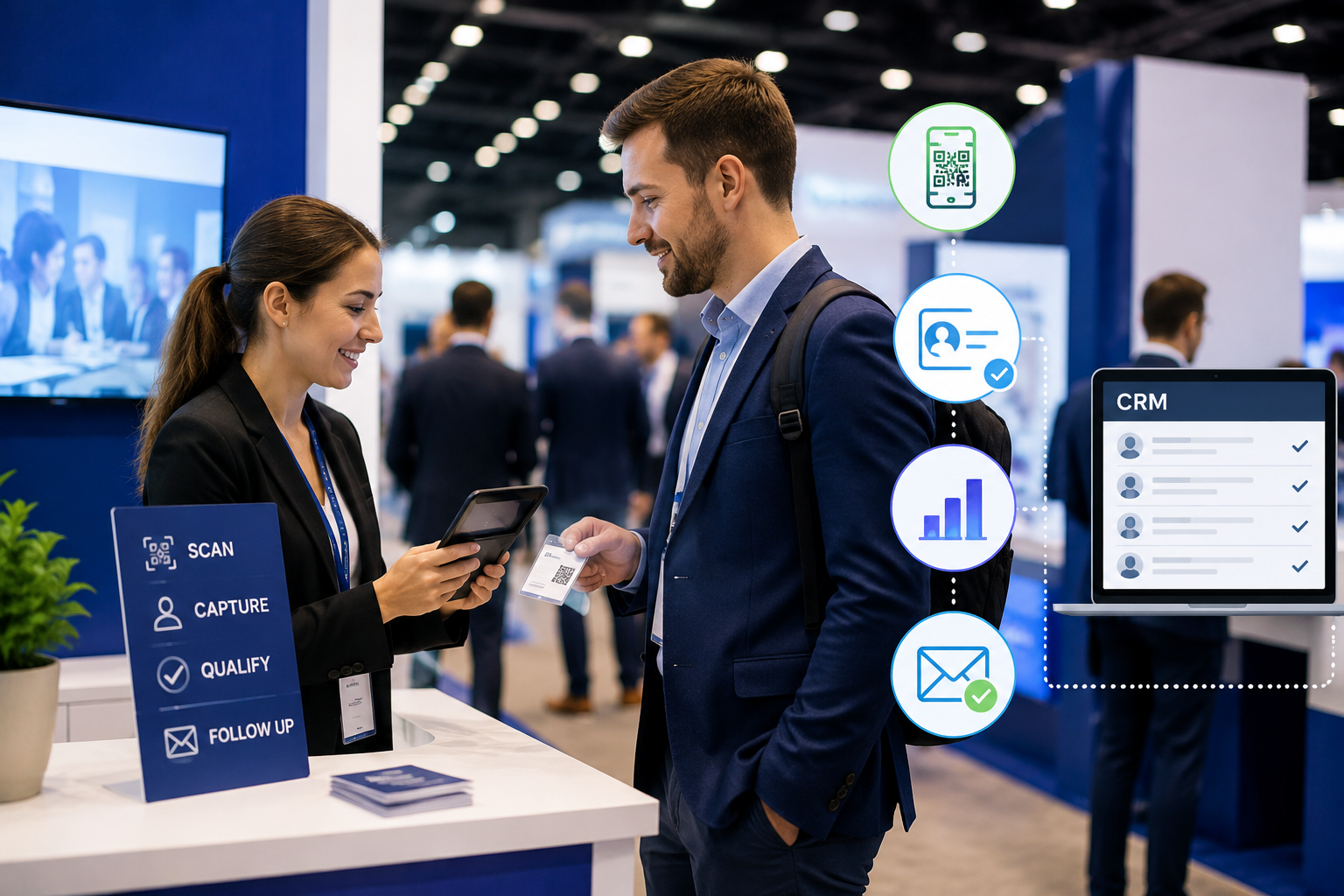
Trade shows create opportunities to meet potential buyers, partners, distributors, and industry professionals face to face. The challenge is that a useful conversation can quickly lose its value when contact details are incomplete, notes are forgotten, or follow-up happens too late. Trade show lead capture solves this problem by turning in-person interactions into organized sales and marketing data.
At its simplest, trade show lead capture collects attendee information during an exhibition or conference. A modern process goes further than saving a name and email address. It can record why the person visited, what they need, how qualified they appear, what they engaged with, and what should happen next.
What Is Trade Show Lead Capture?
Trade show lead capture is a structured method for identifying, recording, qualifying, and managing people who interact with an exhibitor, sponsor, session, or activation during an event. A lead may be captured when an attendee scans a QR code, shares a digital badge, taps an NFC credential, registers for a demonstration, downloads content, claims a reward, attends a sponsored session, or requests a meeting. Traditional methods relied on business cards, paper forms, scanners, and spreadsheets. A modern lead capture system connects identity with qualification details, communication preferences, and next actions. The goal is not simply to build the longest contact list. It is to create a reliable record of meaningful engagement that sales and marketing teams can use.How Does Trade Show Lead Capture Work?
Most systems follow a similar workflow, even when the technology or credential format differs.1. Attendee Information Enters the Event System
The process usually begins during registration. Attendees provide information such as their name, email address, company, job title, industry, and professional interests. Organizers should collect only the information needed to run the event and support agreed experiences. Clear privacy notices and consent choices help attendees understand how their information may be used or shared.2. The Attendee Receives a Credential
The attendee may receive a printed badge, QR code, barcode, NFC badge, mobile ticket, or wallet-based pass. This credential provides a fast way to identify the attendee during check-in, session entry, networking, and sponsor interactions.3. An Interaction Triggers Lead Capture
At a booth or activation, the exhibitor scans, taps, or verifies the attendee’s credential. In other cases, the attendee initiates the exchange by scanning a code, submitting a short form, claiming an offer, or requesting information. The system retrieves approved attendee fields and creates a lead record. This step should be fast enough to support the conversation rather than interrupt it.4. Booth Staff Add Context
Contact information alone rarely explains whether a lead is useful. Strong lead capture software allows staff to add product interest, business challenge, decision-making role, purchase timing, conversation notes, lead priority, follow-up preference, and an assigned representative. For example, two attendees may have the same job title, but one may be researching for next year while the other needs a proposal within two weeks. Without qualification notes, both leads may look identical after the event.5. The Lead Is Scored or Segmented
Leads can be grouped according to fit, intent, behavior, or urgency. Some teams use categories such as hot, warm, and cold. Others score leads using job role, company size, session attendance, demonstration participation, questions asked, and requested next steps. A useful scoring model should reflect the company’s real sales process. It should not treat every booth visit as strong buying intent.6. Data Moves Into Sales and Marketing Workflows
Captured data may be exported or synchronized with a CRM, marketing automation system, or event dashboard. This is where event marketing platforms become valuable: they can connect event interactions with lead routing, email nurture, account management, and reporting instead of leaving information in separate devices or spreadsheets.7. Follow-Up Begins
Effective follow-up refers to the actual conversation. “You mentioned that your team is reviewing badge-free access options” is more relevant than a generic thank-you email. High-priority leads may need direct sales outreach. Educational leads may need a guide or nurture sequence. Partners, media contacts, existing customers, and job seekers should also be routed differently.What Information Should a Lead Capture System Collect?
The right data depends on the event objective and sales process. Useful fields may include contact details, company and role, business need, purchase timeline, product interest, engagement history, conversation notes, lead rating, consent preferences, assigned owner, and next action. Collecting too little makes follow-up difficult, while collecting too much creates friction and unnecessary privacy risk. Every promising lead should still have a clear next step, such as “schedule demo,” “send technical information,” or “follow up next quarter.”Why Is Trade Show Lead Capture Important?
It Reduces Lost Opportunities
Business cards can be misplaced, handwriting can be unclear, and conversations can be forgotten during a busy event. Digital capture creates a central record that is easier to organize and share.It Improves Lead Quality
A qualified lead with useful notes is more valuable than a large list of unexplained scans. Better data helps teams prioritize people who are more likely to benefit from further discussion.It Enables Faster, More Personal Follow-Up
When lead data is available quickly, sales teams can respond while the conversation is still fresh. Interests, notes, and requested actions make outreach specific instead of generic.It Helps Measure Event Performance
Qualified conversations, meetings, demo requests, content engagement, and pipeline movement provide a more useful picture of performance than attendance totals alone.Common Lead Capture Methods
Badge and QR Code Scanning
Staff use a scanner or mobile device to read an attendee badge. It is fast, but its value depends on whether staff can add notes, qualifiers, and next steps.Mobile Lead Capture Apps
Mobile apps allow teams to use phones or tablets and may support scanning, custom questions, lead ratings, notes, and real-time data access.NFC and Wallet-Based Experiences
NFC credentials allow attendees to tap a badge, card, or device to share information or activate an experience. Wallet passes can support admission, identity verification, access, offers, rewards, and sponsor interactions.Forms, Kiosks, and Landing Pages
Forms work well for demonstrations, consultations, contests, content downloads, and self-service interactions. They should be short and clearly explain what happens after submission.AI-Powered Engagement and Matchmaking
AI can recommend relevant exhibitors, sessions, or meetings based on attendee interests and event goals. It can also help organize notes, identify patterns, and prioritize follow-up. Accurate data and human review are still necessary. Modern platforms such as counterTEN connect verified digital identity, wallet-based ticketing, AI-supported engagement, sponsor activation, loyalty experiences, digital assets, and analytics across the event journey. This approach can help organizers understand not only who was captured, but how the engagement developed.A Practical Trade Show Lead Capture Example
Imagine a cybersecurity company exhibiting at a technology conference. An IT director scans a digital pass to enter a product demonstration. A representative records that the attendee is evaluating access-control tools, works for a 2,000-person organization, and wants to replace an existing solution within six months. The attendee requests a technical comparison and agrees to follow-up. The system gives the record a high-priority rating because the attendee fits the target profile, attended the demo, asked implementation questions, and has a defined timeline. The record is routed to the correct account executive, who sends the requested comparison and proposes a discovery call. A record containing only a name and email would force the sales team to guess. The qualified record supports a relevant next conversation.Common Trade Show Lead Capture Problems
Capturing Everyone Without Qualification
Scanning every passerby may increase the count but not the value. Staff should know which questions reveal fit, need, authority, and timing.Using Too Many Fields
Long forms slow interactions. Capture essential information during the conversation and enrich the record later when appropriate.Failing to Train Booth Staff
Technology cannot fix an inconsistent process. Staff need guidance on scanning, qualification questions, notes, consent, ratings, and next steps.Delaying Data Access
When lead lists arrive days later, context fades. Confirm how quickly data becomes available and how it enters existing workflows.Treating Every Lead the Same
A buyer, partner, journalist, customer, and student require different follow-up. Use tags and segments to route each contact appropriately.Measuring Scans Instead of Outcomes
A high scan count does not automatically indicate success. Track qualified meetings, opportunities, pipeline influence, content engagement, and sponsor outcomes alongside volume.How to Choose Lead Capture Software
When comparing lead capture software, evaluate the complete workflow rather than choosing based on one feature. Ask whether the system:- Works with the event’s badge or digital credential
- Supports fast capture and custom qualification fields
- Allows notes, ratings, ownership, and next actions
- Provides real-time or near-real-time access
- Works reliably when venue connectivity is weak
- Integrates with CRM and marketing tools
- Supports consent, permissions, and secure data handling
- Prevents duplicate or incomplete records
- Provides useful exhibitor and sponsor reporting
- Is easy for temporary booth staff to learn