What Makes a Modern Conference Sponsor Platform Effective in 2026? (Data, AI & Automation Explained)
Conferences in 2026 look almost nothing like the events of just a few years ago. Today, sponsors expect more than a logo on a banner, attendees expect personalization the moment they walk in and organizers expect every dollar to translate into measurable outcomes. As a result, the modern conference sponsor platform has become the central nervous system of any serious event. If you run professional events in San Diego or anywhere else across the United States, you've noticed how quickly the bar has risen. So, what separates an effective platform from a glorified attendee list? Let's break it down.
 Artificial intelligence has moved from buzzword to backbone. AI now powers matchmaking between attendees and sponsors based on behavior, interests and intent signals. Instead of forcing visitors to wander the exhibit hall hoping to find relevant booths, the platform suggests the three or four sponsors they should genuinely care about.
Meanwhile, AI also helps sponsors prioritize their time. For example, when a sponsor sees that twelve attendees from their target accounts have walked past their activation in the last hour, they can trigger a personalized push notification or schedule a quick meeting before the day ends. As a result, conversion rates climb and attendees feel respected rather than spammed.
In addition, generative AI now drafts personalized follow-up messages, summarizes booth conversations from voice notes and even predicts which leads are worth pursuing first. Because these tasks once consumed entire marketing teams for weeks, the time savings alone justify the investment many times over.
Artificial intelligence has moved from buzzword to backbone. AI now powers matchmaking between attendees and sponsors based on behavior, interests and intent signals. Instead of forcing visitors to wander the exhibit hall hoping to find relevant booths, the platform suggests the three or four sponsors they should genuinely care about.
Meanwhile, AI also helps sponsors prioritize their time. For example, when a sponsor sees that twelve attendees from their target accounts have walked past their activation in the last hour, they can trigger a personalized push notification or schedule a quick meeting before the day ends. As a result, conversion rates climb and attendees feel respected rather than spammed.
In addition, generative AI now drafts personalized follow-up messages, summarizes booth conversations from voice notes and even predicts which leads are worth pursuing first. Because these tasks once consumed entire marketing teams for weeks, the time savings alone justify the investment many times over.
 Sponsors in 2026 no longer accept impression counts as proof of value. Instead, they want closed-loop reporting that ties their activation directly to qualified meetings, opportunities created and revenue influenced. Consequently, the strongest platform options now include dashboards built around metrics like booth dwell time, session attendance overlap, post-event engagement rates and pipeline contribution.
Moreover, year-over-year benchmarking has become essential. When sponsors can compare this year's results against last year's and against industry averages, they renew faster and often expand their commitment. As a result, platforms that prioritize transparent measurement create a flywheel of repeat business for organizers and steadier revenue across multi-year contracts.
Sponsors in 2026 no longer accept impression counts as proof of value. Instead, they want closed-loop reporting that ties their activation directly to qualified meetings, opportunities created and revenue influenced. Consequently, the strongest platform options now include dashboards built around metrics like booth dwell time, session attendance overlap, post-event engagement rates and pipeline contribution.
Moreover, year-over-year benchmarking has become essential. When sponsors can compare this year's results against last year's and against industry averages, they renew faster and often expand their commitment. As a result, platforms that prioritize transparent measurement create a flywheel of repeat business for organizers and steadier revenue across multi-year contracts.
The Shift from Static Sponsorship to Active Engagement
For years, conference sponsorship meant printed tote bags, lanyard logos and a booth in the back corner. However, that model rarely produced trackable returns. Today, sponsors want measurable lifts on pipeline, brand recall and qualified leads. Therefore, the platforms supporting these events have evolved into intelligent ecosystems that connect ticketing, attendee identity, sponsor activation and post-event follow up inside a single workflow. Moreover, attendees themselves now expect their badge to do more than open doors. They want curated session recommendations, instant networking matches and a rewards system that recognizes their loyalty across multiple events. As a result, an effective conference sponsor platform must serve three masters’ at once: the organizer, the sponsor and the attendee. Otherwise, it falls short of modern expectations and quickly loses momentum.The Data and Identity Layer Drives Everything Else
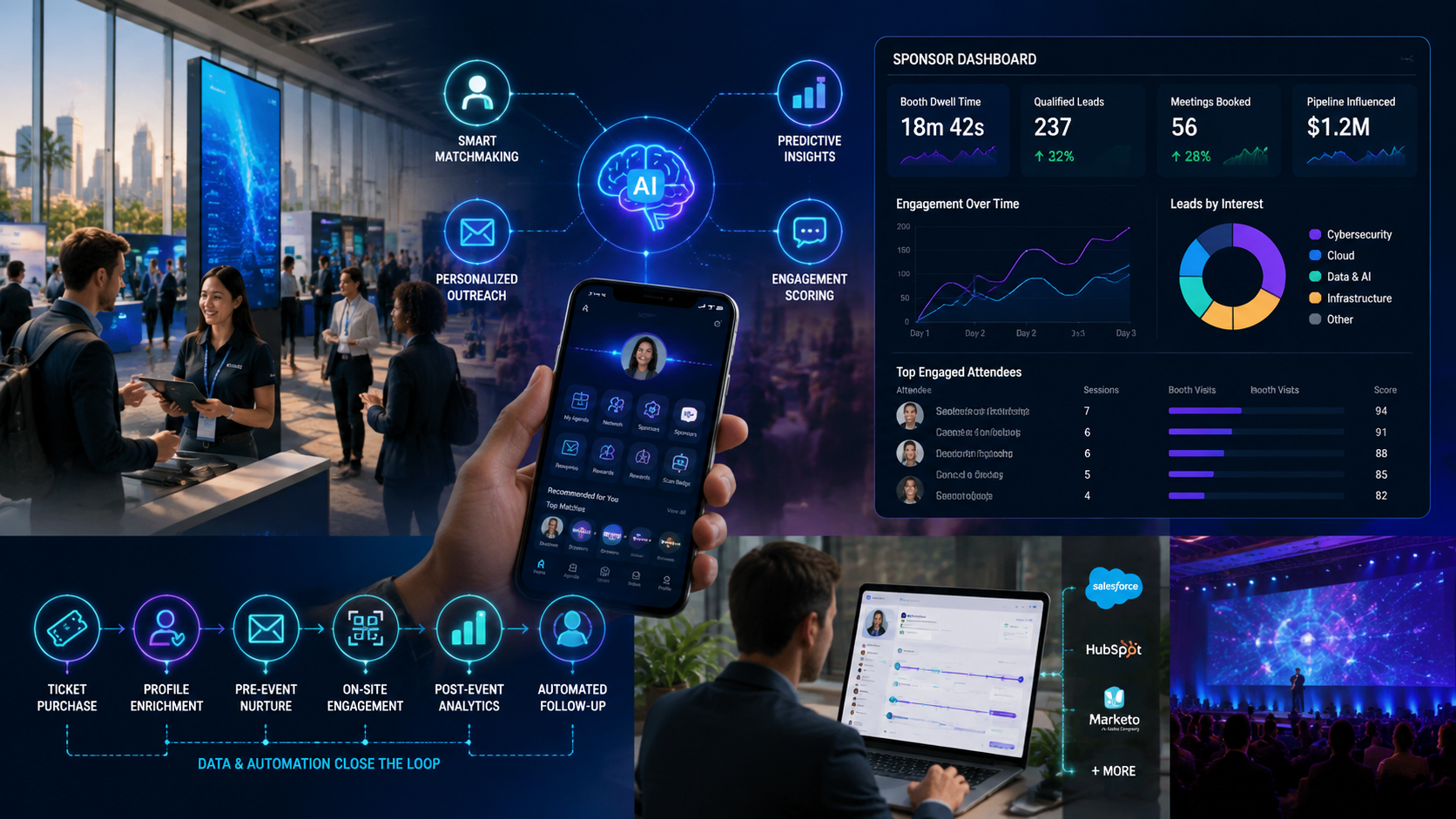
In 2026, verified attendee identity sits at the foundation of every smart event. Without a clean, opt-in data layer, even the fanciest features become guesswork. For instance, if a sponsor wants to deliver targeted offers to senior decision-makers in cybersecurity, the platform must already know who those people are, what they've engaged with and how they prefer to receive communication. Furthermore, modern conference event ticketing has merged with digital identity. Each ticket now functions as a verified pass that links a person's preferences, session attendance and sponsor interactions into one ongoing profile. Consequently, the data from a single conference becomes a long-term asset rather than a one-time spreadsheet. In addition, this approach respects privacy regulations because consent flows directly through the ticketing experience and stays tied to real engagement.AI Brings Personalization at Scale
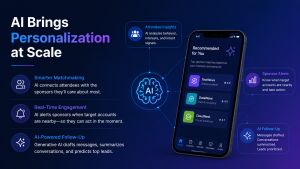
Artificial intelligence has moved from buzzword to backbone. AI now powers matchmaking between attendees and sponsors based on behavior, interests and intent signals. Instead of forcing visitors to wander the exhibit hall hoping to find relevant booths, the platform suggests the three or four sponsors they should genuinely care about.
Meanwhile, AI also helps sponsors prioritize their time. For example, when a sponsor sees that twelve attendees from their target accounts have walked past their activation in the last hour, they can trigger a personalized push notification or schedule a quick meeting before the day ends. As a result, conversion rates climb and attendees feel respected rather than spammed.
In addition, generative AI now drafts personalized follow-up messages, summarizes booth conversations from voice notes and even predicts which leads are worth pursuing first. Because these tasks once consumed entire marketing teams for weeks, the time savings alone justify the investment many times over.
Automation Closes the Loop from Ticket to Follow-Up
The most overlooked feature of any modern platform is automation. Specifically, the journey from conference event ticketing to conference attendee follow up should run on rails. When someone buys a ticket, the system should immediately enrich their profile, share opt-in preferences with relevant sponsors and trigger pre-event nurture sequences. Then, during the event, scans, session check-ins and engagement scores feed live dashboards. Finally, after the closing keynote, automated workflows push qualified leads into sponsor CRMs, send personalized thank-you messages and surface content recommendations based on what each attendee attended. Because manual follow-up is where most sponsorship ROI quietly dies, automation here is non-negotiable. In fact, industry research consistently shows that leads contacted within 24 hours of an event convert at three to five times the rate of those reached a week later. Therefore, a platform that handles this stage well often delivers more value than one with flashier on-site bells and whistles.Measurement Is the New Currency of Sponsorship
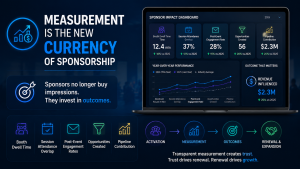
Sponsors in 2026 no longer accept impression counts as proof of value. Instead, they want closed-loop reporting that ties their activation directly to qualified meetings, opportunities created and revenue influenced. Consequently, the strongest platform options now include dashboards built around metrics like booth dwell time, session attendance overlap, post-event engagement rates and pipeline contribution.
Moreover, year-over-year benchmarking has become essential. When sponsors can compare this year's results against last year's and against industry averages, they renew faster and often expand their commitment. As a result, platforms that prioritize transparent measurement create a flywheel of repeat business for organizers and steadier revenue across multi-year contracts.
What to Look for When Evaluating Options
When you evaluate a platform, focus on four questions. First, does it unify ticketing, identity and sponsorship in one place, or are you stitching tools together? Second, does it use AI to drive personalization, or is the term mostly marketing language? Third, does it automate follow-up, or does it stop at the event door? Finally, does it produce measurements that sponsors will accept without argument? If a platform answers yes to all four, it belongs on your shortlist. San Diego has quietly become a hub for this kind of innovation and the team at counterTEN reflects that shift. Because counterTEN combines verified digital identity, AI-powered loyalty and frictionless wallet-based ticketing inside one experience, organizers see deeper sponsor renewals, richer post-event data and a smoother attendee journey from the first email to the final follow-up. The right platform doesn't just run your conference; it turns every attendee into a long-term relationship and every sponsor into a partner who comes back next year.Frequently Asked Questions
-
How is a conference sponsor platform different from standard event registration software?
Standard registration software handles ticketing and check-in, while a conference sponsor platform layers in attendee identity, sponsor activation, AI matchmaking and post-event follow-up. In short, registration tools sell tickets, but sponsor platforms generate measurable ROI for everyone involved. -
Can a conference sponsor platform integrate with our existing CRM and marketing stack?
Yes, most modern platforms offer native integrations with Salesforce, HubSpot, Marketo and similar systems. Additionally, open APIs and webhook support allow custom workflows so sponsor leads, attendee preferences and engagement scores flow directly into your existing tools. -
How does AI improve sponsor outcomes at a conference?
AI improves outcomes in three main ways. First, it matches attendees with relevant sponsors based on behavior and intent. Second, it predicts which leads are most likely to convert. Third, it personalizes follow-up messages, so sponsors save time while reaching the right people faster. -
What kind of data should organizers share with sponsors and how do privacy rules apply?
Organizers should share opted-in attendee profiles, engagement signals and aggregated insights, never raw personal data without explicit consent. Because regulations like CCPA and GDPR require permission, modern platforms build consent capture directly into the ticketing flow, so every handoff stays compliant. -
How soon after an event should conference attendees follow up begin?
Ideally, automated follow-up should start within 24 hours of the closing session. Research consistently shows that early outreach converts three to five times the rate of delayed contact. Therefore, automation that triggers personalized messages on day one is one of the highest-ROI features any platform offers.